
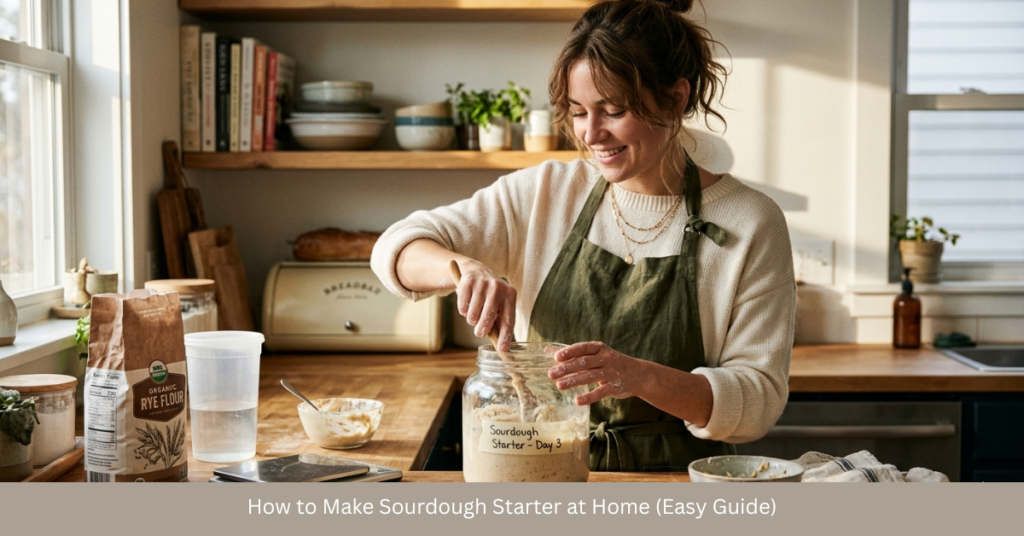

There’s something deeply satisfying about baking bread from scratch—and it all starts with learning how to make sourdough starter. That bubbly, tangy mixture of flour and water is the heart of every great sourdough loaf.
If you’ve ever thought it sounded complicated, don’t worry. This guide breaks down how to make sourdough starter step by step using simple ingredients you probably already have at home. Whether you’re a beginner or just looking to improve your technique, you’ll find everything you need right here.
What Is a Sourdough Starter?
A sourdough starter is a natural ferment made from flour and water. Over time, it captures wild yeast and beneficial bacteria from the environment.
This living culture replaces commercial yeast and gives sourdough bread its:
- Signature tangy flavor
- Chewy texture
- Better digestibility
Ingredients You Need
To get started, you only need two basic ingredients:
- Flour (all-purpose, whole wheat, or bread flour)
- Water (preferably filtered or dechlorinated)
Optional Tools
- Glass jar or container
- Spoon or spatula
- Kitchen scale (or measuring cups if you want to learn how to make sourdough starter without a scale)
How to Make Sourdough Starter Step by Step
Day 1: Mix Your Starter
Combine:
- ½ cup flour
- ¼ cup water
Stir until smooth. Cover loosely and leave at room temperature.
Day 2–3: Let It Rest
You may see a few bubbles, or nothing at all—that’s normal.
Discard half the mixture and feed it again with:
- ½ cup flour
- ¼ cup water
Day 4–5: Feed Daily
By now, your starter should smell slightly sour and show more bubbles. Continue feeding once daily.
Day 6–7: Ready to Use
Your starter is ready when it:
- Doubles in size within 4–6 hours after feeding
- Has a pleasant tangy smell
- Looks bubbly and active
Now you know how to make it from scratch successfully!
Choosing the Right Flour
Different flours affect how your starter behaves:
All-Purpose Flour
- Easy and affordable
- Great for beginners learning how to make sourdough starter with all purpose flour
Bread Flour
- Higher protein
- Helps create a stronger starter (useful if you’re exploring how to make sourdough starter stronger)
Whole Wheat Flour
- Ferments faster
- Boosts activity early on
Tips to Make Your Starter More Active
If your starter feels sluggish, try these:
- Feed it more frequently
- Keep it in a warm place (around 24–27°C)
- Use whole wheat flour occasionally
These methods help if you’re wondering how to make sourdough starter more active or improve fermentation.
How to Make Sourdough Starter Rise Faster
Want quicker results? Here’s how:
- Place your jar in a warm spot (like near a light or oven)
- Use slightly warm water
- Feed twice a day
These small tweaks can speed up fermentation without compromising quality.
Adjusting the Flavor: More or Less Sour
To Make It More Sour
- Let it ferment longer between feedings
- Use less frequent feeding
- Keep it slightly cooler
Perfect if you’re experimenting with how to make sourdough starter more sour.
To Make It Less Sour
- Feed more often
- Keep it warmer
- Use more fresh flour
Helpful for those wanting to know how to make sourdough starter less sour or less acidic.
Can You Use Yeast?
Technically yes—but it’s not traditional. If you’re curious about how to make sourdough starter with yeast, you can add a pinch of commercial yeast to kickstart fermentation.
However, a true sourdough starter relies on wild yeast for authentic flavor and texture.
Gluten-Free Sourdough Starter
You can absolutely make a gluten-free version using:
- Rice flour
- Buckwheat flour
- Sorghum flour
The process remains the same, making it ideal for those researching how to make sourdough starter gluten free.
Common Mistakes to Avoid
- Using chlorinated water (it can kill bacteria)
- Forgetting to discard before feeding
- Keeping it in a cold environment
- Expecting instant results
Patience is key when learning how to make this at home.
FAQ
1. How long does it take to make a sourdough starter?
Usually 5–7 days, depending on temperature and feeding consistency.
2. Why isn’t my starter bubbling?
It may be too cold or underfed. Try moving it to a warmer spot and feeding regularly.
3. Can I use tap water?
Yes, but let it sit for a few hours to remove chlorine.
4. How do I know my starter is strong enough?
It should double in size within a few hours after feeding—this indicates it’s ready for baking.
5. Can I store it in the fridge?
Yes, once established. Feed it weekly to maintain health.
6. What’s the best flour for beginners?
All-purpose flour is the easiest option when starting out.
Conclusion
Learning how to make sourdough starter is simpler than it seems—it just takes a bit of patience and consistency. With flour, water, and time, you can create a living culture that transforms your baking.
Start small, stay consistent, and don’t worry about perfection. Once your starter is active and bubbly, you’re ready to bake delicious homemade bread.
If you’re serious about baking, your next step is to try your first sourdough loaf and experiment with flavors, textures, and techniques.