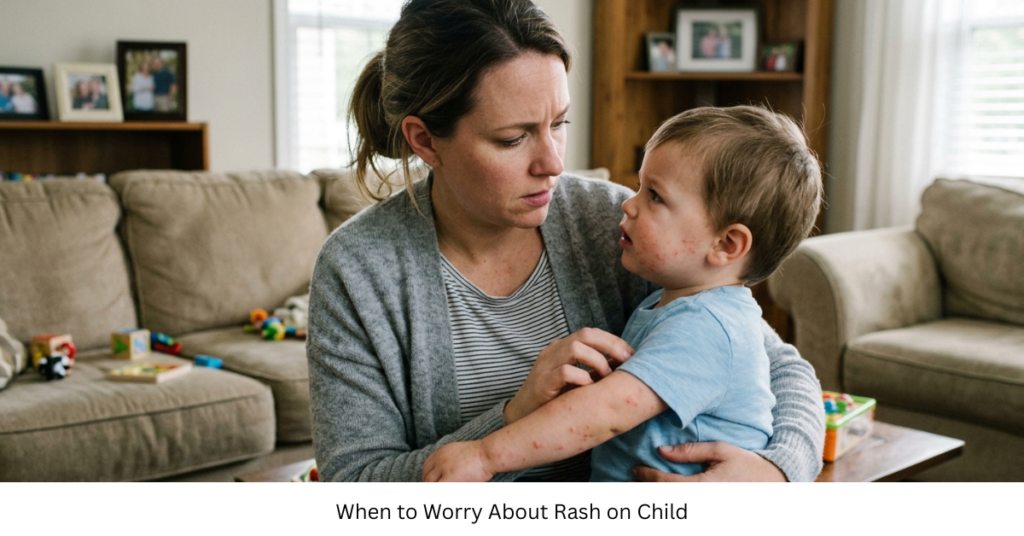

A rash on your child’s skin can appear suddenly—and just as quickly spark panic. While most rashes are harmless and fade on their own, some may signal something more serious. Knowing when to worry about rash on child is essential for every parent, especially when symptoms seem unusual or persistent.
In this guide, we’ll break down common causes, warning signs, and practical steps you can take to protect your child’s health—without unnecessary stress.
What Causes Rashes in Children?
Children’s skin is sensitive, making them more prone to rashes. Some of the most common causes include:
- Allergic reactions (foods, soaps, fabrics)
- Viral infections (like measles or chickenpox)
- Bacterial infections
- Heat rash due to sweating
- Eczema or dermatitis
- Insect bites or stings
Most of these are mild, but recognizing the difference between harmless and serious is key.
When to Worry About Rash on Child
Not every rash needs medical attention—but some definitely do. Here are clear warning signs:
1. Rash with Fever
If a rash appears along with a high fever, it could indicate an infection. Seek medical care if:
- Fever is above 38°C (100.4°F)
- Rash spreads quickly
- Child seems unusually tired or irritable
2. Rash That Doesn’t Fade
Press gently on the rash. If it doesn’t turn white (non-blanching), it could signal a more serious condition.
3. Rapidly Spreading Rash
A rash that spreads within hours—especially across the body—should not be ignored.
4. Difficulty Breathing or Swelling
This may indicate a severe allergic reaction. If you notice:
- Swelling of lips or face
- Trouble breathing
- Wheezing
Seek emergency care immediately. This is a critical sign related to allergy when to worry about rash on child.
5. Blisters, Pain, or Open Sores
Painful rashes, especially those with blisters or pus, may indicate infection and require treatment.
When to Worry About Rash on Child Face
Facial rashes often concern parents the most—and for good reason. The skin here is delicate, and some conditions need prompt attention.
Watch out for:
- Rash spreading to eyes
- Swelling or redness around eyelids
- Crusting or oozing
- Signs of infection (warmth, pain)
Mild baby acne or drool rash is usually harmless, but persistent or worsening symptoms should be checked.
Allergy: When to Worry About Rash on Child
Allergic rashes can range from mild to life-threatening. Common triggers include:
- Foods (nuts, dairy, eggs)
- Medicines
- Pollen or dust
- Skincare products
Warning Signs of Severe Allergy
- Hives covering large areas
- Swelling in face or throat
- Vomiting or dizziness
- Breathing difficulty
These symptoms require urgent medical care.
When to Worry About Rash on Child Home Remedies
Many parents prefer to try gentle solutions first—and that’s okay for mild cases.
Safe Home Remedies
- Cool compresses to reduce itching
- Oatmeal baths for soothing skin
- Fragrance-free moisturizers
- Loose cotton clothing
When Home Remedies Are Not Enough
Stop home treatment and see a doctor if:
- Rash lasts more than 3–5 days
- Symptoms worsen
- Child develops fever or pain
- No improvement despite care
Common Types of Childhood Rashes
Here’s a quick overview to help you identify typical rashes:
| Rash Type | Symptoms | Serious? |
|---|---|---|
| Heat Rash | Small red bumps, itchy | No |
| Eczema | Dry, scaly patches | No |
| Chickenpox | Blisters, fever | Sometimes |
| Measles | Red rash + fever + cough | Yes |
| Hives | Raised itchy welts | Depends |
When to Call a Doctor Immediately
Don’t wait—seek medical help if your child has:
- Rash with high fever
- Purple or non-fading spots
- Severe pain or swelling
- Trouble breathing
- Signs of dehydration
- Rash after a new medication
FAQs
1. When to worry about rash on child?
You should worry if the rash comes with fever, spreads quickly, doesn’t fade, or causes breathing issues.
2. Are most childhood rashes serious?
No, most are harmless and resolve on their own within a few days.
3. Can teething cause rashes?
Yes, especially around the mouth due to drooling, but these are usually mild.
4. How long should a rash last before seeing a doctor?
If it lasts more than 3–5 days or worsens, it’s best to consult a doctor.
5. What is the most dangerous rash in children?
Rashes associated with infections like meningitis (non-blanching rash) are considered medical emergencies.
Conclusion
Understanding when to worry about rash on child can make all the difference between peace of mind and timely medical care. While most rashes are harmless, it’s important to stay alert for warning signs like fever, rapid spreading, or breathing difficulties.
Trust your instincts—if something doesn’t feel right, it’s always better to consult a healthcare professional. Meanwhile, simple home care can help manage mild cases safely and effectively.
If you found this helpful, consider exploring more child health guides to stay informed and confident as a parent.