

You’re ready to head out, you turn the key—or press the button—and… nothing. A dead battery can ruin your day, but knowing how to jump start a car can get you back on the road in minutes.
This guide walks you through the process step by step, explains what you need, and highlights safety tips so you don’t make costly mistakes. Whether you’re a beginner or just need a refresher, you’ll find everything clearly explained here.
What You Need Before You Begin
Before you start, make sure you have the right tools and setup:
- A set of jumper cables
- Another vehicle with a working battery
- Safety gloves (optional but recommended)
- A clear understanding of your car’s battery terminals
Tip: Always check your car’s manual for specific instructions, especially if you drive a newer or hybrid vehicle.
Step-by-Step: How to Jump Start a Car
1. Position the Vehicles Correctly
Park the working car close to the dead one, but don’t let them touch. Turn off both engines and engage the parking brakes.
2. Identify Battery Terminals
Open both hoods and locate the batteries. You’ll see:
- Positive (+) terminal (usually red)
- Negative (−) terminal (usually black)
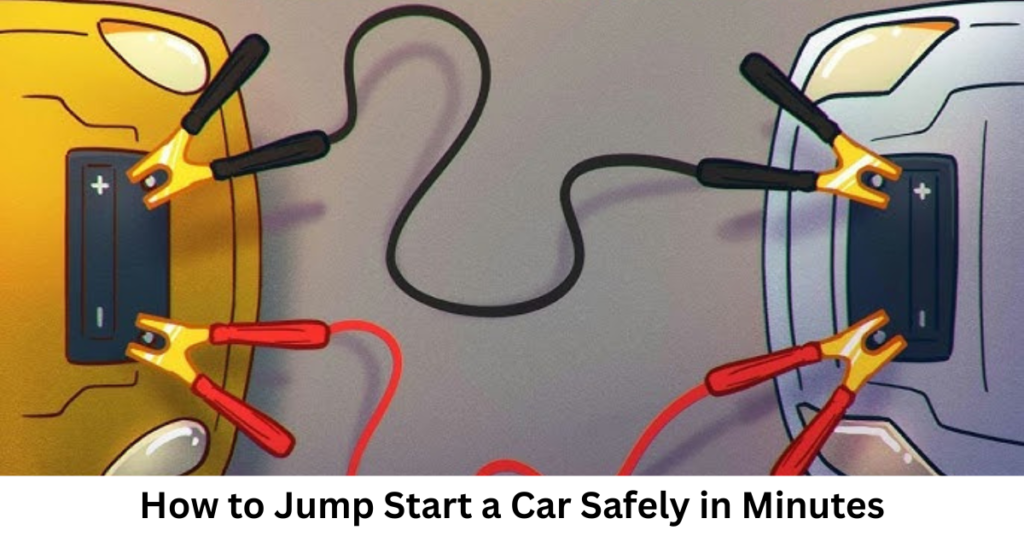
3. Connect the Jumper Cables in Order
This part matters—connecting cables incorrectly can cause damage.
Follow this exact sequence:
- Attach the red clamp to the dead battery’s positive terminal
- Connect the other red clamp to the working battery’s positive terminal
- Attach the black clamp to the working battery’s negative terminal
- Connect the final black clamp to an unpainted metal surface on the dead car (not the battery)
4. Start the Working Car
Turn on the engine of the car with the good battery and let it run for a few minutes. This allows power to flow into the dead battery.
5. Start the Dead Car
Try starting the stalled vehicle. If it doesn’t start right away, wait a couple more minutes and try again.
6. Remove the Cables Safely
Once the car starts, disconnect the cables in reverse order:
- Black clamp from metal surface
- Black clamp from working battery
- Red clamp from working battery
- Red clamp from revived car
7. Let the Engine Run
Keep the car running for at least 15–20 minutes or drive around to recharge the battery.
Safety Tips You Shouldn’t Ignore
- Never let the cable clamps touch each other
- Avoid leaning over the battery while connecting cables
- Don’t attempt if the battery is cracked or leaking
- Always double-check polarity (positive to positive, negative to ground)
A small mistake here can damage your car’s electrical system—or worse.
Common Mistakes to Avoid
Even though the process is simple, people often get these wrong:
- Reversing cable connections
- Connecting the last clamp directly to the dead battery
- Trying to jump start a completely damaged battery
- Turning off the car immediately after starting
Avoiding these mistakes makes the process safer and more effective.
Signs Your Battery Might Need Replacement
Jump-starting is a temporary fix. Watch for these warning signs:
- Car struggles to start frequently
- Dim headlights
- Electrical issues
- Battery older than 3–5 years
If these show up regularly, it’s time to replace your battery instead of relying on repeated jump starts.
Alternative: Using a Portable Jump Starter
If you don’t have another car nearby, a portable jump starter is a great option. It works similarly but doesn’t require a second vehicle.
Just connect it to your battery, power it on, and start your car. It’s especially useful for emergencies or solo travel.
FAQs
1. How long should I wait before starting the dead car?
Wait about 2–5 minutes after connecting the cables before attempting to start.
2. Can I jump start a car in the rain?
Yes, but be extra cautious. Ensure cables are dry and connections are secure.
3. Why shouldn’t I connect the negative cable to the battery?
Connecting it to a metal surface reduces the risk of sparks near the battery, which can be dangerous.
4. What if the car still won’t start?
Your battery may be completely dead or there could be another issue like a faulty starter or alternator.
5. Is it bad to jump start a car often?
Yes, frequent jump starts indicate a deeper problem. It’s better to fix or replace the battery.
Conclusion
Learning how to jump start a car is one of those essential skills that can save you time, money, and stress. With the right tools and a bit of care, you can handle a dead battery confidently and safely.
If this happens often, don’t ignore the signs—get your battery checked or replaced. And if you want to be extra prepared, consider keeping a portable jump starter in your car.
Being ready isn’t just convenient—it’s empowering.