

Introduction
Ever noticed your car feeling a little “off” while driving? It might not be your imagination—it could be your tires. Knowing how to check tire pressure is one of the simplest yet most important car maintenance skills every driver should have. Proper tire pressure improves fuel efficiency, extends tire life, and keeps you safe on the road.
In this guide, you’ll learn everything from using a gauge to checking pressure without tools, plus how to monitor it in modern cars like Honda, Tesla, and Audi models.
Why Tire Pressure Matters
Before jumping into the steps, it’s worth understanding why this small task matters so much.
- Safety: Underinflated tires can lead to poor handling and blowouts
- Fuel Efficiency: Correct pressure improves mileage
- Tire Longevity: Prevents uneven wear
- Comfort: Ensures a smoother ride
How to Check Tire Pressure Correctly
Step-by-Step Method (Using a Gauge)
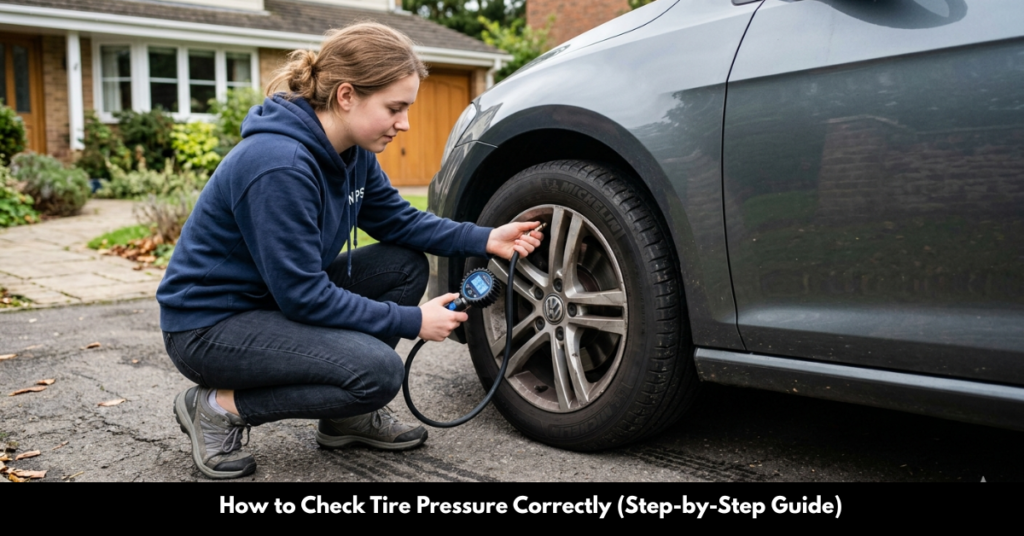
If you’re wondering how to check tire pressure with gauge, here’s the simplest way:
- Check recommended PSI
Look inside your driver-side door or owner’s manual. - Remove valve cap
Unscrew it from the tire valve stem. - Attach the gauge
Press it firmly onto the valve. - Read the pressure
The gauge will display PSI (pounds per square inch). - Adjust if needed
Add or release air until it matches the recommended level. - Replace the valve cap
Always screw it back on to keep dirt out.
Tip: Check pressure when tires are “cold” (before driving or after a few hours of rest).
How to Check Tire Pressure at Gas Station
Gas stations make it quick and convenient:
- Pull up near the air pump
- Insert coins or use a card (if required)
- Set the desired PSI on the machine
- Attach the hose to each tire
- The machine will inflate or deflate automatically
This is one of the easiest ways if you don’t own a gauge.
How to Check Tire Pressure Without a Gauge
Wondering how to check tire pressure without a gauge? While not as accurate, you can still get a rough idea:
- Visual check: A flat-looking tire usually means low pressure
- Hand test: Press down on the tire—too soft means underinflated
- Driving feel: Poor handling or pulling to one side can signal pressure issues
Important: This method is only temporary. Always confirm with a proper tool.
How to Check Tire Pressure on Dashboard
Modern vehicles make things easier with built-in systems.
Using TPMS (Tire Pressure Monitoring System)
Many cars display tire pressure directly:
- Go to your dashboard menu
- Navigate to “Vehicle Info” or “Tire Pressure”
- View PSI for each tire
This is especially useful if you’re learning how to check tire pressure on dashboard systems.
Model-Specific Tips
Different cars may have slightly different systems. Here’s how it works in popular models:
Honda Vehicles
- How to check tire pressure on Honda Civic / Accord / CR-V:
Use the TPMS via dashboard settings or infotainment screen. Some models require recalibration after adjusting pressure.
Mazda CX-5
- How to check tire pressure Mazda CX 5:
The system alerts you when pressure is low, but manual gauge checks are still recommended for accuracy.
Tesla
- How to check tire pressure on Tesla:
Open the touchscreen → Service → Tire Pressure. It shows real-time PSI readings.
Audi Q5
- How to check tire pressure on Audi Q5:
Access the MMI system → Vehicle → Tire Pressure Monitoring. Reset after inflating tires.
Common Mistakes to Avoid
- Checking pressure after driving (heat increases PSI readings)
- Ignoring the recommended PSI
- Forgetting the spare tire
- Not recalibrating TPMS after adjustments
How Often Should You Check Tire Pressure?
- At least once a month
- Before long trips
- During seasonal changes (temperature affects pressure)
FAQs
1. What is the correct tire pressure for my car?
Check the sticker inside your driver-side door. It usually ranges between 30–35 PSI for most cars.
2. Can I drive with low tire pressure?
It’s not recommended. It can damage tires, reduce fuel efficiency, and increase accident risk.
3. Do all cars have tire pressure sensors?
Most modern vehicles do, but older cars may require manual checks.
4. Is it okay to slightly overinflate tires?
No. Overinflation can reduce grip and cause uneven wear.
5. How long does it take to check tire pressure?
Less than 5 minutes with a gauge or gas station pump.
Conclusion
Learning how to check tire pressure isn’t just about maintenance—it’s about safety, savings, and smarter driving. Whether you’re using a gauge, a gas station pump, or a built-in dashboard system, the key is consistency.
Make it a habit to check your tires regularly, especially before long trips. A few minutes of effort can save you from costly repairs and dangerous situations down the road.
If you’re serious about car care, start with your tires—they’re literally where the road begins.