
“How are you doing” is one of the most common phrases used in everyday conversations, yet many people don’t fully understand its deeper meaning or how to respond naturally. Whether you’re greeting a friend, starting a conversation, or learning English, knowing how to use how are you doing properly can make your communication smoother and more confident.
In this guide, you’ll learn the meaning, best replies, and how to say it in different languages like Spanish, French, and more.
What Does “How Are You Doing” Mean?
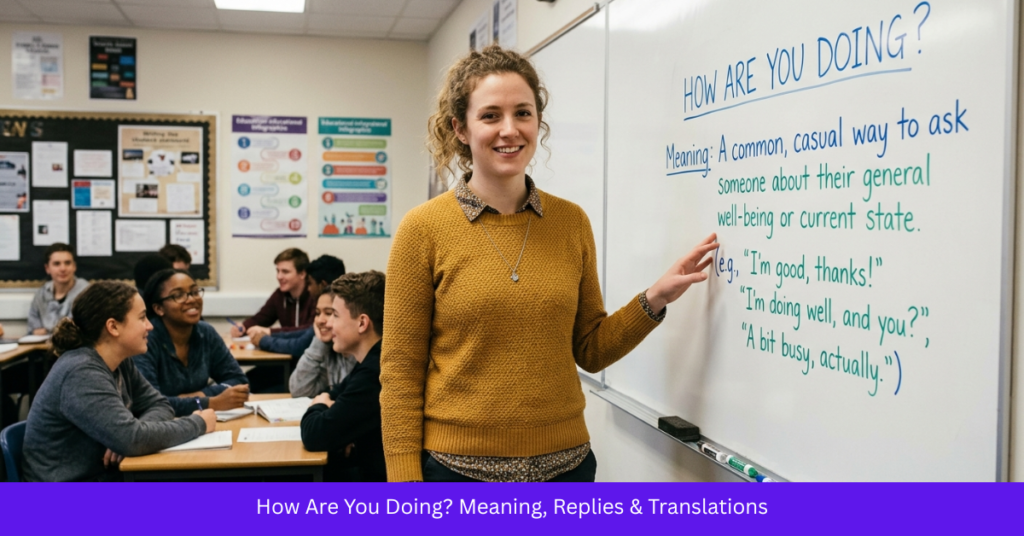
At its core, how are you doing meaning refers to asking about someone’s current state—emotionally, physically, or generally in life.
It’s similar to:
- How are you?
- How’s it going?
- How have you been?
However, it often feels slightly more personal and conversational than a simple “how are you?”
When People Use It
- Greeting someone casually
- Starting a conversation
- Showing care or interest
- Checking on someone’s well-being
How Are You Doing Today: When to Use It
Adding “today” makes the question more specific. How are you doing today focuses on the present moment rather than general well-being.
Example Situations:
- At work: “Hi, how are you doing today?”
- Meeting someone after a stressful event
- Customer service interactions
This version sounds more thoughtful and attentive.
Best Ways to Reply Naturally
Choosing the right how are you doing answer depends on the situation and your mood.
Casual Replies
- I’m good, thanks!
- Doing great!
- Pretty good, how about you?
Honest Replies
- I’ve been better, but I’m okay
- A bit tired today
- Busy, but things are going well
Friendly & Engaging Replies
- I’m doing well! What about you?
- Good, just working on a few things
Tip: Always return the question to keep the conversation flowing.
How to Say “How Are You Doing” in Different Languages
Learning translations helps you connect globally. Here’s how to say it in popular languages:
How Are You Doing in Spanish
- ¿Cómo estás?
- ¿Cómo estás hoy? (for “how are you doing today in Spanish”)
If you’re wondering how do you say how are you doing in Spanish, these are the most common phrases.
How Are You Doing in French
- Comment ça va ?
- Comment allez-vous ? (formal)
If you’re asking how to say how are you doing in French, both versions work depending on the situation.
How Are You Doing in German
- Wie geht es dir? (informal)
- Wie geht es Ihnen? (formal)
How Are You Doing in Japanese
- お元気ですか (Ogenki desu ka?)
If you’re curious about how do you say how are you doing in Japanese, this is the standard polite expression.
How Are You Doing in Italian
- Come stai? (informal)
- Come sta? (formal)
How Are You Doing in Korean
- 잘 지내세요? (Jal jinaeseyo?)
Common Variations You Should Know
Instead of repeating the same phrase, try these alternatives:
- Hi how are you doing
- Hello how are you doing
- How’s everything going?
- What’s up?
- How have you been?
These variations help you sound more natural and less repetitive.
Tips to Use It Naturally in Conversations
To sound fluent and confident, keep these tips in mind:
- Match the tone: Use casual phrases with friends, formal ones in professional settings
- Smile when speaking: It makes your greeting feel genuine
- Listen actively: Be ready to respond to the other person’s answer
- Avoid overthinking: It’s a simple greeting, not an interrogation
FAQs
1. Is “how are you doing” formal or informal?
It’s generally informal but can be used in semi-formal situations depending on tone and context.
2. What’s the difference between “how are you” and “how are you doing”?
“How are you doing” feels slightly more conversational and personal.
3. How do you respond professionally?
You can say: “I’m doing well, thank you. How about you?”
4. Can I use it in emails?
Yes, especially in friendly or semi-formal emails.
5. Why do people ask but not expect a real answer?
Sometimes it’s just a polite greeting rather than a deep question.
Conclusion
Understanding how are you doing goes beyond just a simple greeting—it’s about connection, tone, and communication. Whether you’re learning its meaning, figuring out the best replies, or exploring how to say it in different languages, mastering this phrase helps you sound more natural and confident in conversations.
Next time someone asks you, “how are you doing?”, you’ll not only understand it better—you’ll know exactly how to respond.