

Introduction
If you’ve ever wondered how do you say hi in Spanish, you’re not alone. Whether you’re planning a trip, learning a new language, or just curious, mastering greetings is the first step to real communication.
Spanish is one of the most widely spoken languages in the world, and saying “hi” correctly can help you make a great first impression. In this guide, you’ll learn not just one, but multiple ways to greet people in Spanish—depending on the situation, time of day, and level of formality.
The Most Common Way to Say Hi in Spanish
Hola – The Universal Greeting
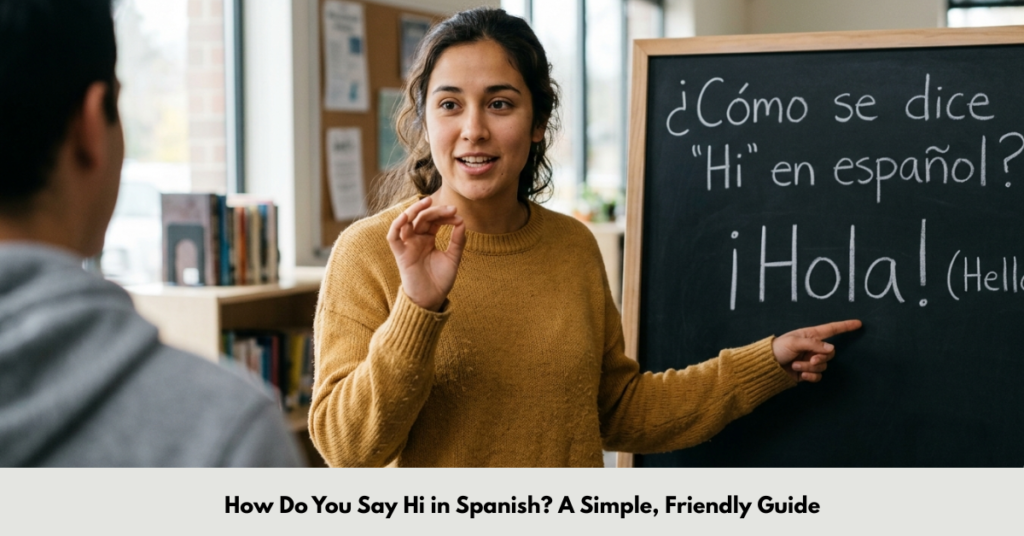
The simplest answer to how do you say hi in Spanish language is:
Hola (pronounced: OH-lah)
This is the most common and versatile greeting. You can use it in almost any situation:
- With friends and family
- In casual conversations
- Even in semi-formal settings
Think of hola as the Spanish equivalent of “hi” or “hello.”
Other Ways to Say Hi in Spanish
While hola works everywhere, Spanish offers more variety depending on context.
1. Informal Greetings
Use these with friends, peers, or people your age:
- ¿Qué tal? – How’s it going?
- ¿Qué pasa? – What’s up?
- ¿Cómo estás? – How are you? (informal)
These phrases are great if you want to sound more natural and less textbook-like.
2. Formal Greetings
In professional or respectful situations, go for a more polite tone:
- Buenos días – Good morning
- Buenas tardes – Good afternoon
- Buenas noches – Good evening/night
- ¿Cómo está? – How are you? (formal)
If you’re unsure, it’s always safer to start formal.
3. Regional and Casual Variations
Different Spanish-speaking countries have their own flavor:
- ¿Qué onda? – Popular in Mexico
- ¿Qué hubo? – Common in Colombia
- ¿Qué más? – Used in Latin America
These variations add personality and cultural touch to your greetings.
When to Use Each Greeting
Understanding context is key when learning how do you say hi in Spanish naturally.
Use Hola when:
- You don’t know the person well
- You want a safe, neutral greeting
Use informal phrases when:
- Talking to friends or classmates
- Chatting casually
Use formal greetings when:
- Speaking to elders
- In business or professional settings
- Meeting someone for the first time
Quick Comparison Table
| English | Spanish | Usage |
|---|---|---|
| Hi / Hello | Hola | Universal |
| Good morning | Buenos días | Formal/Neutral |
| What’s up | ¿Qué pasa? | Informal |
| How are you | ¿Cómo estás? | Informal |
| How are you | ¿Cómo está? | Formal |
Tips to Sound More Natural
If you’ve ever typed google how do you say hi in spanish, you’ll notice pronunciation matters just as much as vocabulary.
Here are a few quick tips:
- Smile when you speak – it naturally improves tone
- Keep it simple – “hola” is always enough
- Match the situation – formal vs informal matters
- Practice pronunciation – Spanish is phonetic, so say it as it’s written
Common Mistakes to Avoid
Even simple greetings can go wrong if you’re not careful:
- Using informal phrases in formal settings
- Mispronouncing “hola” (don’t pronounce the “h”)
- Overcomplicating greetings when “hola” works fine
Keep it easy and natural.
FAQs
1. How do you say hi in Spanish?
The most common way is hola. It works in almost every situation.
2. How do you say hi in Spanish language formally?
Use greetings like buenos días, buenas tardes, or ¿cómo está? for formal situations.
3. Can I just say hola all the time?
Yes, hola is universal and widely accepted in both casual and semi-formal settings.
4. What’s a slang way to say hi in Spanish?
Phrases like ¿qué pasa? or ¿qué tal? are popular informal greetings.
5. Why are there so many ways to say hi in Spanish?
Spanish varies across countries and cultures, so greetings change based on region and context.
Conclusion
Now you have a clear and practical answer to how do you say hi in Spanish. While hola is your go-to greeting, exploring variations like ¿qué tal? or buenos días helps you sound more natural and confident.
The key takeaway? Start simple, pay attention to context, and don’t be afraid to practice. Language learning is all about connection—and a simple “hola” is your first step.