
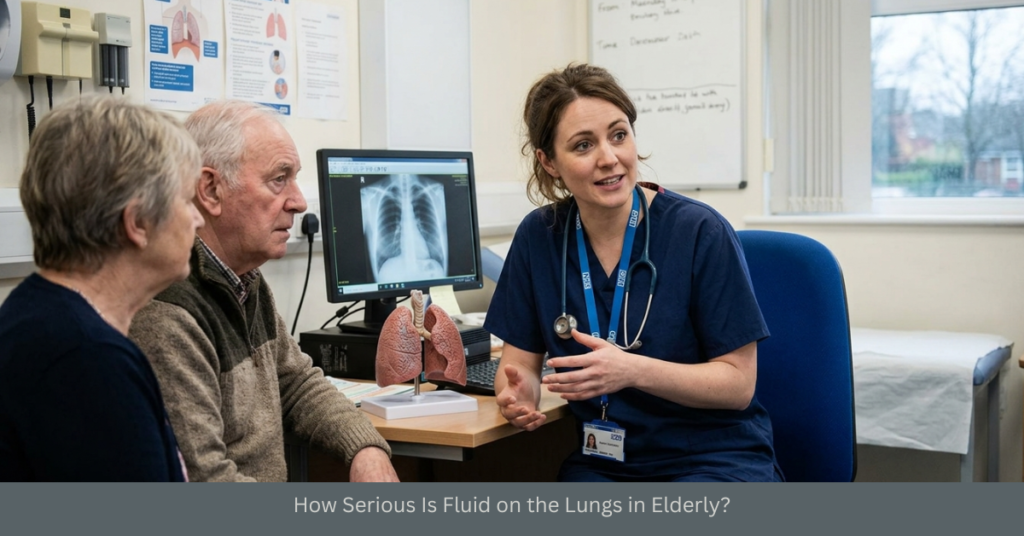

It often starts with something subtle—shortness of breath, fatigue, or a lingering cough. But when it comes to how serious is fluid on the lungs in elderly, the answer can range from manageable to life-threatening, depending on the cause and timing of treatment.
Fluid on the lungs, medically known as pulmonary edema or pleural effusion, is not a disease itself but a warning sign. In older adults, it deserves immediate attention because underlying conditions can escalate quickly. This guide breaks everything down in simple terms—what it means, what causes it, and when to worry.
What Is Fluid on the Lungs?
Before diving into severity, it’s important to understand what is fluid on the lungs.
Normally, your lungs are filled with air sacs that allow oxygen to pass into the bloodstream. When fluid builds up—either inside these sacs or around the lungs—it disrupts breathing.
There are two main types:
- Pulmonary edema: Fluid inside the lung tissue
- Pleural effusion: Fluid collecting around the lungs
Both can affect breathing, especially in elderly individuals with weaker immune systems or chronic illnesses.
How Serious Is Fluid on the Lungs in Elderly?
The seriousness depends on what causes fluid on the lungs in elderly and how quickly it’s treated.
Mild Cases
In some situations, fluid buildup is small and caused by treatable issues like mild infections. With proper care, recovery is possible.
Moderate to Severe Cases
However, in elderly patients, it often signals more serious conditions such as:
- Heart failure
- Lung infections
- Kidney problems
- Cancer
In these cases, is fluid on the lungs serious? Yes—especially if untreated. It can lead to:
- Severe breathing difficulty
- Oxygen deprivation
- Organ failure
Life-Threatening Situations
If left untreated, fluid buildup can become critical. Many people ask, can you die from fluid on the lungs? Unfortunately, the answer is yes—particularly in older adults with underlying health issues.
What Causes Fluid on the Lungs in Elderly?
Understanding fluid on the lungs causes is key to proper treatment.
Common Causes
1. Heart Conditions
- Congestive heart failure is the most common cause
- The heart cannot pump blood effectively, leading to fluid buildup
2. Lung Infections
- Pneumonia is a major contributor
- Many ask: is fluid on the lungs pneumonia?
Not always—but pneumonia can cause it
3. Kidney Disease
- Poor kidney function leads to fluid retention in the body
4. Cancer
- Lung or metastatic cancers can cause fluid accumulation
- This raises concern about fluid on the lungs cancer
5. Liver Disease
- Cirrhosis can indirectly cause fluid buildup
6. Injury or Trauma
- Chest injuries or surgery may lead to fluid accumulation
7. Inflammation or Blood Clots
- Conditions like pulmonary embolism can also be triggers
Fluid on the Lungs Symptoms
Recognizing symptoms of fluid on the lungs early can make a huge difference.
Common Signs to Watch For:
- Shortness of breath (especially when lying down)
- Persistent coughing
- Chest pain or tightness
- Rapid breathing
- Fatigue and weakness
- Swelling in legs or abdomen
In elderly individuals, symptoms may appear gradually, making them easy to overlook.
What Does Fluid on the Lungs Mean for Overall Health?
You might wonder, what does fluid on the lungs mean in practical terms.
It often indicates:
- A failing organ system (heart, kidneys, or lungs)
- An infection that needs urgent treatment
- A chronic illness worsening
In elderly patients, even mild fluid buildup can quickly turn serious due to reduced resilience.
Fluid on the Lungs Treatment
Treatment depends entirely on what can cause fluid on the lungs in each individual case.
Common Treatment Options
1. Medications
- Diuretics (to remove excess fluid)
- Antibiotics (if infection is present)
- Heart medications
2. Oxygen Therapy
- Helps improve breathing and oxygen levels
3. Drainage Procedures
- Doctors may remove fluid using a needle (thoracentesis)
4. Treating Underlying Conditions
- Managing heart failure, kidney disease, or cancer
Important Note:
Early treatment dramatically improves outcomes, especially in elderly patients.
Is Fluid on the Lungs a Sign of Cancer?
A common concern is: is fluid on the lungs a sign of cancer?
The answer is: sometimes.
- Cancer can cause fluid buildup, particularly in advanced stages
- However, many non-cancerous conditions (like heart failure or infections) are more common causes
Proper diagnosis is essential to determine the real cause.
How Do You Get Fluid on the Lungs?
People often ask, how do you get fluid on the lungs?
It usually develops when:
- The body retains excess fluid
- Blood vessels leak due to pressure or inflammation
- Organs like the heart or kidneys fail to function properly
In elderly individuals, multiple factors may combine, increasing risk.
FAQs
1. How serious is fluid on the lungs in elderly patients?
It can range from mild to life-threatening. The seriousness depends on the underlying cause and how quickly treatment begins.
2. What are the early symptoms of fluid on the lungs?
Shortness of breath, fatigue, and coughing are the most common early signs.
3. Can fluid on the lungs go away on its own?
In mild cases, it might improve with treatment of the underlying issue, but it usually requires medical attention.
4. Is fluid on the lungs always caused by heart problems?
No. While heart failure is common, infections, cancer, and kidney disease can also cause it.
5. How is fluid on the lungs diagnosed?
Doctors use chest X-rays, CT scans, ultrasounds, and blood tests to confirm the condition.
6. Can elderly people recover from fluid on the lungs?
Yes, especially if diagnosed early and treated properly. However, recovery depends on overall health and the root cause.
Conclusion
So, how serious is fluid on the lungs in elderly? It’s a condition that should never be ignored. While some cases are manageable, others can quickly become life-threatening without timely care.
The key takeaway is simple: early recognition saves lives. If you notice symptoms like breathlessness or persistent coughing in an elderly loved one, don’t wait—seek medical advice immediately.
Understanding the causes, symptoms, and treatment options empowers you to act fast and make informed decisions.