
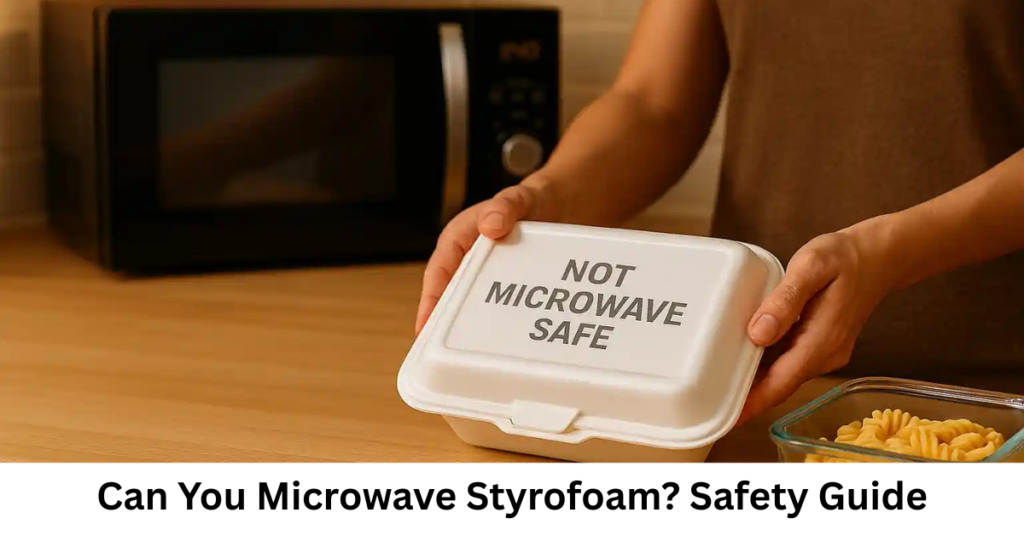

A quick microwave fix can feel harmless, but when the container is foam, the answer gets a lot less simple. Can you microwave Styrofoam? In most cases, the safest answer is no unless the container is clearly labeled microwave-safe. Styrofoam is commonly used for takeout boxes, cups, trays, and plates, but foam packaging can soften, warp, or melt under heat, and food-safety agencies warn against using foam containers in the microwave unless they are specifically approved for that use.
What Styrofoam Actually Is
Styrofoam is a type of polystyrene foam. It contains a lot of air, which makes it lightweight and insulating, but it also means it can lose its shape when exposed to high temperatures. The Singapore Food Agency explains that polystyrene can soften and melt under heat, and it specifically says Styrofoam is not microwaveable. USDA food-safety guidance also warns that foam trays and plastic wraps are not heat-stable at high temperatures.
Can You Microwave Styrofoam Safely?
Only if the container is explicitly labeled microwave-safe. Even then, you should still follow the package directions and heat food carefully. FDA consumer guidance says to follow package directions when using the microwave, and it recommends using a microwave-safe plate when covering food. The key point is simple: the container has to be designed for microwave use, not just “plastic” or “foam.”
Why “a minute” still matters
A common mistake is thinking, “It is only for 1 minute, so it should be fine.” That is not a safe assumption. Heat can build quickly in the food itself, especially with oily, fatty, or very hot items, and that heat can make foam soften or warp before you notice it. That is why “can you microwave styrofoam for 1 minute” is still a risk question, not a safe shortcut.
Why Microwaving Foam Can Be a Problem
The concern is not just mess. When foam heats up, it can lose structure, and melting or warping may allow unwanted substances to migrate into food. USDA guidance says this directly for foam trays and wraps. Singapore’s food authority also advises against microwaving Styrofoam at all, recommending microwave-safe plastic containers instead.
Here is what can happen if the container is not microwave-safe:
- The foam may bend, sag, or melt.
- Hot spots in the food may overheat the container.
- Greasy or oily foods may raise the temperature faster and make the problem worse.
- The container may weaken, leak, or contaminate the food.
What About Styrofoam Plates, Cups, Containers, and To-Go Boxes?
The answer is basically the same for all of them: do not assume they are microwave-safe. The shape does not matter as much as the material and the label. If you are wondering about can you microwave styrofoam plates, can you microwave styrofoam cups, can you microwave styrofoam containers, or can you microwave styrofoam to go boxes, the safest rule is to check for a microwave-safe label and avoid heating them if that label is missing. USDA and SFA both advise against using foam containers in high heat unless the container is designed for that purpose.
For cups, be extra careful with soup, coffee, tea, and other liquids. Liquids can heat unevenly in a microwave, which puts more stress on the container. FDA guidance on microwave use emphasizes even heating, standing time, and temperature checking because microwave cooking can be uneven.
How to Tell Whether a Foam Container Is Microwave-Safe
Before reheating food, do this quick check:
- Look for a clear microwave-safe label or written heating instructions.
- Do not rely on the container “looking thick” or “feeling sturdy.”
- Avoid any foam container that is cracked, warped, stained, or oily.
- When in doubt, transfer the food to a microwave-safe dish before heating.
Best Safer Alternatives
If you want the easiest low-stress option, use a container that is meant for microwave reheating. FDA guidance supports using microwave-safe cookware and following package directions, and it notes that microwave cooking should be done carefully for even heating. A practical choice is glass or ceramic cookware that is labeled microwave-safe.
A simple habit helps a lot:
- Move leftovers out of foam packaging right away.
- Reheat in a microwave-safe dish.
- Stir, rotate, and let food stand after heating for more even results.
FAQ
Can you microwave Styrofoam?
Only if the container is clearly labeled microwave-safe. Otherwise, the safer choice is not to microwave it. Foam containers can soften, warp, or melt under heat.
Can you microwave Styrofoam cups?
Not by default. Treat them as unsafe unless the cup says it is microwave-safe. Hot liquids can heat the cup quickly and increase the risk of warping.
Can you microwave Styrofoam plates?
Usually no, unless the plate is specifically marked for microwave use. Foam trays and plates are not heat-stable enough for regular microwaving.
Can you microwave Styrofoam for 1 minute?
A short time does not make an unsafe container safe. Even one minute can be enough to soften or damage foam, especially with hot or oily food.
Can you microwave Styrofoam containers?
Only if the packaging says microwave-safe. If there is no label, transfer the food to a microwave-safe dish first.
Can you microwave Styrofoam to go boxes?
It is better not to. Takeout boxes made from foam are commonly not designed for microwave heat unless the package specifically says otherwise.
Safe can you microwave Styrofoam?
The safest answer is “only when labeled microwave-safe.” Without that label, do not use it in the microwave.
How long can you microwave Styrofoam?
There is no universal safe time for unlabeled foam containers. The right approach is not to time it, but to check whether the container is approved for microwave use.
Conclusion
So, can you microwave Styrofoam? Sometimes, but only when the container is clearly labeled microwave-safe. In everyday life, the smarter habit is to remove food from foam packaging and reheat it in a microwave-safe dish instead. That small step helps you avoid melting, warping, and unnecessary food-safety risks. For more practical kitchen safety tips, keep exploring related food storage and reheating guides.