
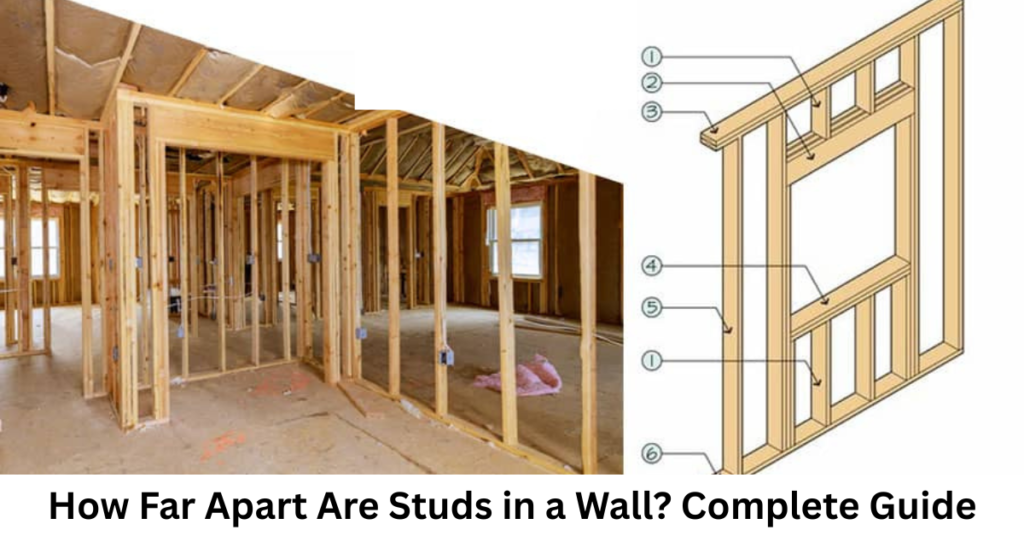

If you’ve ever tried hanging a shelf, mounting a TV, or drilling into a wall, you’ve probably wondered how far apart are studs and why they matter so much. Studs are the hidden wooden or metal frames behind your walls that hold everything together.
Understanding stud spacing is essential for safe home improvement, whether you’re working in a modern house, an apartment, or even an older building. In this guide, we’ll break it all down in a simple, practical way so you’ll never have to guess again.
Standard Stud Spacing in Walls
In most modern construction, stud spacing follows a fairly standard rule. Builders usually place studs at consistent intervals to ensure strength, stability, and easy installation of drywall.
The most common spacing you’ll find is:
- 16 inches on center (OC) – the most widely used standard
- 24 inches on center (OC) – used in some newer or energy-efficient designs
So when people ask how far apart are studs in a wall, the answer is typically 16 or 24 inches from the center of one stud to the center of the next.
This spacing helps support wall loads, insulation, and fixtures evenly.
How Far Apart Are Studs in a House?
When looking at residential buildings, stud spacing can vary slightly depending on design, materials, and local building codes. In most cases, however, the structure remains quite consistent.
Modern Homes
In newer homes, stud spacing is almost always standardized. Most builders stick to 16 inches on center for strength and durability. In some energy-efficient designs, 24 inches on center is used to reduce material costs while still maintaining structural integrity.
So, how far apart are studs in a house today? Usually 16 inches, sometimes 24 inches.
Old Houses
Older homes are a different story. Construction standards weren’t always as strict as they are today, so spacing can be inconsistent.
In many cases, how far apart are studs in old houses may range anywhere from 14 inches to 24 inches—or even irregular in some walls. This is why finding studs in older homes often requires a stud finder or careful tapping technique.
Apartments
Apartments are typically built with shared walls and stricter fire and soundproofing regulations. As a result, stud spacing tends to be more uniform.
In most cases, how far apart are studs in apartments follows the standard 16 inches on center, though metal framing is also common in high-rise buildings, which can slightly change the feel when locating studs.
Mobile Homes
Mobile homes are built differently from traditional houses. They are designed to be lightweight while still structurally stable.
In many mobile homes, how far apart are studs in mobile home structures can be closer together or sometimes slightly wider, depending on the manufacturer. Common spacing includes 16 inches or 24 inches, but materials are often thinner than standard residential walls.
Why Stud Spacing Matters
Understanding stud spacing is not just for curiosity—it’s important for safety and home improvement.
Here’s why it matters:
- Safe mounting: TVs, cabinets, and shelves must be anchored into studs
- Wall strength: Studs support the structure of your home
- Drywall installation: Panels are attached directly to studs
- Renovation accuracy: Helps avoid damaging pipes or wiring
Without knowing stud spacing, drilling into a wall becomes guesswork—and that can lead to costly mistakes.
How to Find Wall Studs Easily
Even if you know the general spacing, finding studs in real life is key. Here are simple methods:
1. Use a Stud Finder
A stud finder is the most accurate tool. It detects density changes behind the wall.
2. Knock and Listen
Lightly tap the wall. A hollow sound usually means no stud, while a solid sound indicates one.
3. Look for Electrical Outlets
Outlets are usually attached to a stud on one side, giving you a reference point.
4. Measure 16 Inches
Since how far apart are studs usually follows a pattern, measuring 16 inches from a known stud often works.
Common Mistakes People Make
Many DIY beginners make avoidable errors when dealing with studs:
- Assuming all walls follow the same spacing
- Not verifying before drilling
- Confusing pipes or metal pipes for studs
- Ignoring irregular spacing in older homes
Taking a few extra minutes to confirm stud locations can prevent serious damage.
FAQ: Stud Spacing Explained
1. How far apart are studs in a wall typically?
Most walls use 16 inches on center, though 24 inches is also common in some structures.
2. Can stud spacing vary within the same house?
Yes, especially in older homes or areas with renovations.
3. Are studs always wood?
No. Many modern buildings use metal studs, especially in apartments and commercial buildings.
4. Why is 16 inches standard?
It provides a strong balance between material use, structural strength, and drywall support.
5. How can I find studs without tools?
You can use tapping, outlet positioning, and measuring techniques to estimate locations.
Conclusion
Knowing how far apart are studs is essential for anyone doing home repairs, decorating, or renovations. While the standard spacing is usually 16 inches on center, variations exist in different types of buildings such as houses, apartments, older homes, and mobile homes.
Once you understand these patterns, working with walls becomes much easier and safer. Whether you’re hanging something small or mounting heavy fixtures, always take the time to locate studs properly.
If you’re planning more DIY projects, learning how walls are built is the first step toward doing things confidently and correctly.