
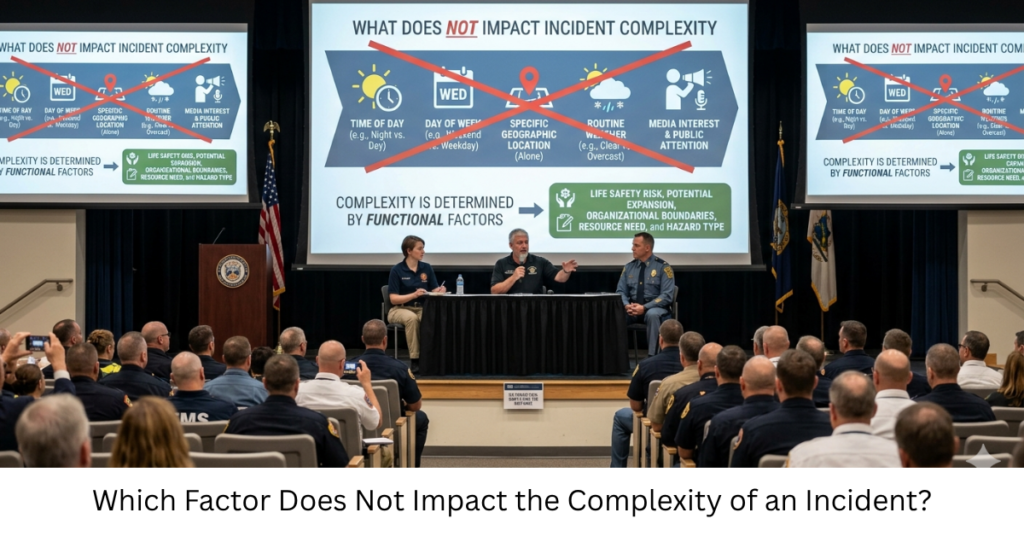

When dealing with emergencies or operational disruptions, one question often comes up: which factor does not impact the complexity of an incident? Understanding this can make a huge difference in how effectively a situation is handled.
Incident complexity isn’t just about how “big” something looks—it’s shaped by multiple underlying factors that influence decision-making, resources, and response strategies. In this article, we’ll break down what truly matters, what doesn’t, and why this distinction is so important.
What Is the Complexity of an Incident?
Before identifying which factor does not impact the complexity of an incident, it’s important to understand what “complexity” actually means.
In simple terms, the complexity of an incident refers to how difficult it is to manage, control, and resolve a situation. This is commonly assessed in fields like emergency management, IT service management, and disaster response.
Key characteristics of incident complexity:
- Number of people or teams involved
- Level of coordination required
- Duration of the incident
- Risk to life, property, or operations
What Factors Impact the Complexity of an Incident?
To answer what factor does not impact the complexity of an incident, we first need to look at the factors that do.
1. Scope and Scale of the Incident
The size of the incident plays a major role. A small, contained issue is easier to manage than a widespread crisis.
2. Resource Requirements
Incidents that require more personnel, equipment, or expertise are naturally more complex.
3. Time Pressure
Urgency increases complexity. The less time you have, the harder it becomes to coordinate an effective response.
4. Stakeholder Involvement
More stakeholders—such as government bodies, organizations, or departments—mean more communication and coordination challenges.
5. Uncertainty and Information Gaps
Incomplete or rapidly changing information makes decision-making more difficult.
Which Factor Does Not Impact the Complexity of an Incident?
Now to the main question: which factor does not impact the complexity of an incident?
The simple answer: The job title or rank of the person reporting the incident does NOT impact its complexity.
Why This Factor Doesn’t Matter
While it might seem important who reports an issue, the factor does not impact the complexity of an incident because:
- Complexity is determined by the situation, not the individual
- A junior employee can report a highly complex issue
- A senior executive can report a simple, low-impact problem
Example:
- A system outage affecting thousands of users = high complexity
- A minor bug reported by a CEO = low complexity
The reporting person’s position doesn’t change the actual difficulty of resolving the incident.
Common Misconceptions About Incident Complexity
Many people misunderstand when determining the complexity of an incident, often focusing on irrelevant factors.
Misconception 1: “Importance of the person matters”
It doesn’t. Complexity is about operational impact, not hierarchy.
Misconception 2: “All urgent issues are complex”
Urgency increases pressure, but not necessarily complexity.
Misconception 3: “More visibility means more complexity”
High visibility may increase scrutiny, but it doesn’t change the core complexity.
How to Accurately Assess Incident Complexity
If you want to properly evaluate factors that impact the complexity of an incident, follow this simple checklist:
Ask these questions:
- How many systems or areas are affected?
- What resources are required to resolve it?
- Is the situation evolving or stable?
- How critical is the impact?
Quick Tip:
Focus on impact, scale, and uncertainty—not on who reported the issue.
Why Understanding This Matters
Knowing what factors impact the complexity of an incident helps teams:
- Respond faster and more efficiently
- Allocate resources correctly
- Avoid unnecessary escalation
- Improve overall incident management
Misjudging complexity can lead to wasted time, poor decisions, or even escalation of the problem.
FAQs
1. What factor does not impact the complexity of an incident?
The job title or seniority of the person reporting the incident does not impact its complexity.
2. What factors impact the complexity of an incident?
Key factors include scope, resource requirements, time pressure, stakeholder involvement, and uncertainty.
3. Does urgency always increase complexity?
No. Urgency adds pressure but doesn’t always make an incident more complex.
4. Why is it important to identify the right factors?
It ensures accurate response planning and prevents over- or underestimating the situation.
5. When determining the complexity of an incident, what should you focus on?
Focus on operational impact, required resources, and coordination challenges—not irrelevant details.
Conclusion
Understanding which factor does not impact the complexity of an incident is just as important as knowing what does. While many variables influence how difficult an incident is to manage, the identity or rank of the person reporting it simply doesn’t matter.
Instead, focus on real indicators like scale, urgency, and resource needs. By doing so, you’ll make smarter decisions, respond more effectively, and handle incidents with confidence.
If you’re looking to improve your incident management strategy, start by evaluating the right factors—and ignoring the wrong ones.