
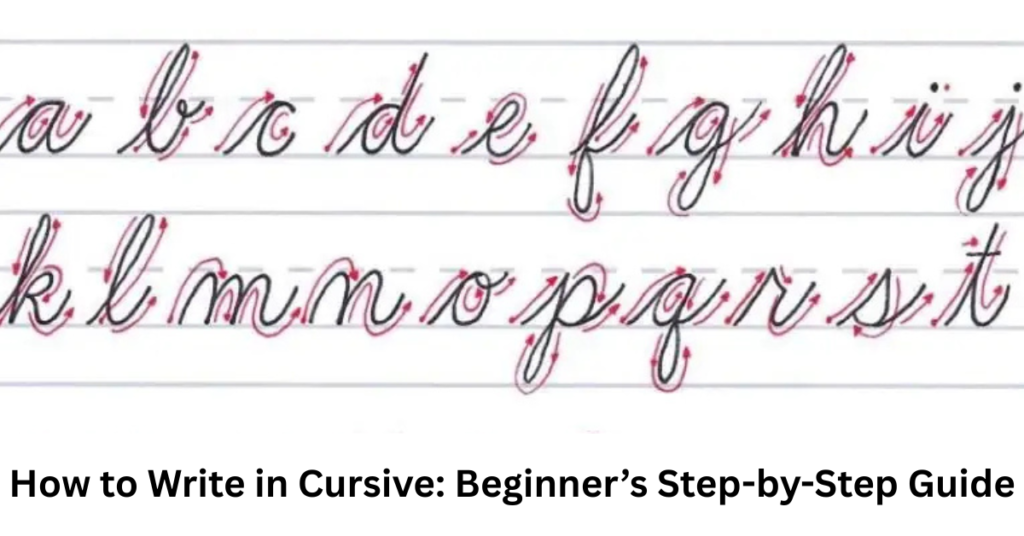

If you’ve ever admired elegant handwritten notes or beautiful signature styles, you’ve probably wondered about how to write in cursive for beginners. Cursive writing has a smooth, flowing style that connects letters together, making writing faster, more stylish, and more personal.
The good news? Anyone can learn it. You don’t need artistic talent—just patience, practice, and the right guidance. In this guide, you’ll learn everything from basic strokes to mastering the full alphabet in cursive.
What is Cursive Writing and Why It Matters
Cursive writing is a style where letters are joined together in a flowing manner. Instead of lifting your pen after every letter, your hand moves smoothly across the page.
It matters because:
- It improves handwriting speed
- It enhances fine motor skills
- It makes writing more artistic and personal
- It helps in developing better reading comprehension in some learners
For many students, learning how to write in cursive also builds confidence in handwriting and creativity.
Tools You Need to Start Cursive Writing
Before you begin, gather a few simple tools:
- A lined notebook (preferably with dotted midlines)
- A smooth pen or pencil
- Cursive handwriting worksheets (optional but helpful)
- A quiet space for practice
These basic tools are enough to start your journey into cursive writing without feeling overwhelmed.
How to Write in Cursive Alphabet (A to Z)
One of the first steps in mastering cursive is understanding how to write in cursive alphabet from A to Z. Each letter has a unique flow, and practice is key.
When learning how to write in cursive a to z, start slowly:
- Focus on lowercase letters first
- Practice uppercase letters after gaining confidence
- Repeat each letter multiple times until it feels natural
Lowercase Practice Tips:
- a, c, e, o are similar rounded shapes
- b, d, h, k require upward loops
- g, j, y include downward strokes below the line
Uppercase Practice Tips:
Uppercase cursive letters are often more decorative. Take your time and don’t rush them.
Step-by-Step Guide to Learn Cursive Writing
To truly learn how to write in cursive, follow this simple step-by-step method:
Step 1: Learn Basic Strokes
Start with simple curves, loops, and lines. These are the building blocks of cursive letters.
Step 2: Practice Individual Letters
Focus on one letter at a time until it becomes smooth.
Step 3: Connect Letters
Once you’re comfortable, start joining letters together.
Step 4: Write Simple Words
Try easy words like “cat,” “dog,” or “sun.”
Step 5: Write Full Sentences
Gradually move toward full paragraphs for better flow.
With consistent effort, you’ll naturally improve your cursive writing skills.
Learning How to Write in Cursive Through Daily Practice
If you are serious about improvement, learning how to write in cursive should become a daily habit.
Here’s a simple routine:
- Practice 10–15 minutes daily
- Write the alphabet once every day
- Copy short paragraphs from books or notes
- Focus on smoothness, not speed
Consistency is more important than long practice sessions.
How to Write in Cursive Letters with Proper Flow
Understanding how to write in cursive letters is all about connection. Unlike print writing, cursive letters are linked together.
Some key tips:
- Keep your pen movement continuous
- Avoid lifting your pen too often
- Maintain equal spacing between words
- Keep letters slightly slanted for a natural look
The more you practice, the more natural it will feel.
Common Mistakes Beginners Make
When learning cursive, beginners often face these issues:
- Writing too fast too early
- Ignoring proper letter shape
- Inconsistent slant or spacing
- Not practicing daily
Avoiding these mistakes will significantly improve your progress.
Tips for Mastering How to Learn How to Write in Cursive
If you’re wondering how to learn how to write in cursive faster, here are some helpful tips:
- Slow down your writing speed initially
- Use ruled paper for better alignment
- Observe cursive handwriting examples
- Trace letters before writing independently
- Stay patient and don’t rush progress
Remember, cursive writing is a skill built over time.
Practice Makes Perfect: Improve Your Cursive Skills
The secret to success is repetition. Even 10 minutes a day can lead to visible improvement in a few weeks.
Try mixing practice styles:
- Alphabet drills
- Word writing
- Sentence copying
- Free writing in cursive
This balanced approach keeps learning interesting and effective.
FAQs About Cursive Writing
1. What is the easiest way to start cursive writing?
Start with basic strokes and lowercase letters. Practice slowly and consistently.
2. How long does it take to learn cursive?
Most beginners notice improvement within 2–4 weeks of daily practice.
3. Can adults learn cursive writing?
Yes, cursive can be learned at any age with regular practice.
4. Is cursive writing still useful today?
Yes, it helps improve handwriting speed, creativity, and personal expression.
5. Do I need special tools for cursive writing?
No, a simple pen and notebook are enough to begin.
Conclusion
Learning cursive is not just about writing—it’s about developing flow, patience, and creativity. Whether you’re just starting or improving your skills, understanding how to write in cursive for beginners gives you a strong foundation.
With consistent practice of the alphabet, words, and sentences, you’ll gradually master elegant handwriting. Keep practicing daily, stay patient, and enjoy the process of transforming your writing style.
Your journey to beautiful cursive writing starts with a single stroke—so begin today.